

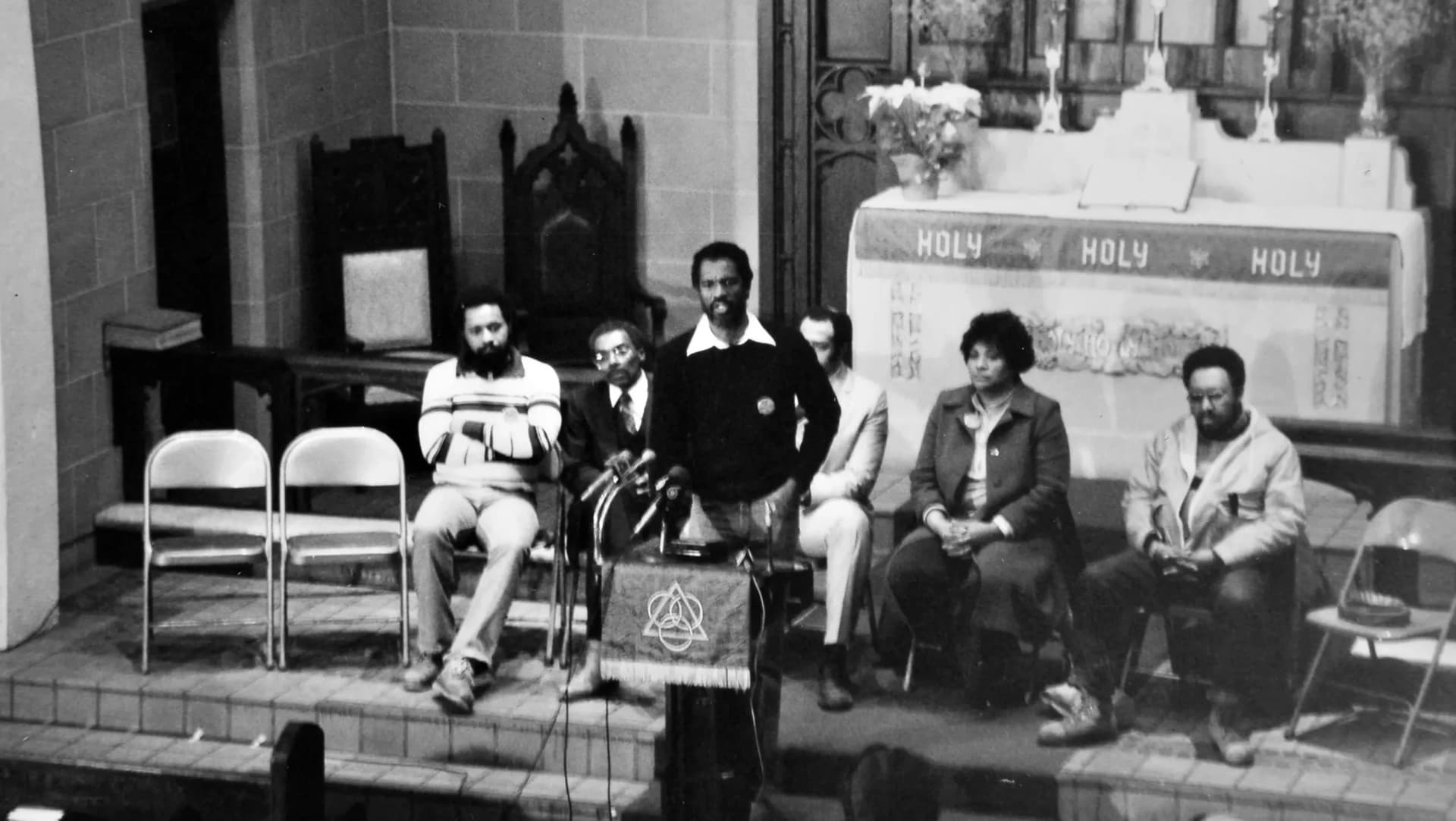
Source: Provided by Howard Fuller
‘I love Mike McGee’: Howard Fuller reflects on friendship, conflict and legacy

Jun 19, 2026, 6:00 AM CT
Share


When the conversation turns to the giants who shaped Black Milwaukee, names like Vel Phillips, Joshua Glover, James Cameron, Hank Aaron, Gwen Moore and Mike McGee are often among the first mentioned. But any serious accounting of the city’s fight for civil rights, educational justice and Black empowerment is incomplete without Dr. Howard Fuller — a relentless activist, educator and movement leader whose influence has stretched across generations.
Fuller left his mark in North Carolina and Chicago, before returning to his boyhood home in Milwaukee and has been everything from Black militant Malcolm X follower, innovative education reform advocate, Milwaukee Public Schools superintendent and Marquette University professor.
Fuller was a leader in Milwaukee’s Black community alongside McGee most notably in 1981 following the fatal police beating of Ernest Lacy. The duo appeared in local media, including on TV nearly every night, calling for justice for Lacy’s family.
McGee and Fuller were two of the most powerful Black men in the city. But not everything was cordial all the time.
“We worked on other things both before and after Lacy, but we also had a period where we were not friends, let me put it that way,” Fuller told the Milwaukee Courier in an interview.
The Courier is dedicating a special edition to McGee on this 2026 Juneteenth holiday. The iconic former Milwaukee alderman, Vietnam War veteran and former Black Panther leader is dealing with a terminal cancer diagnosis and agreed to help document his influence on the city. (To read McGee’s story visit here.)
Fuller looks back fondly on McGee's years together, despite their differences.
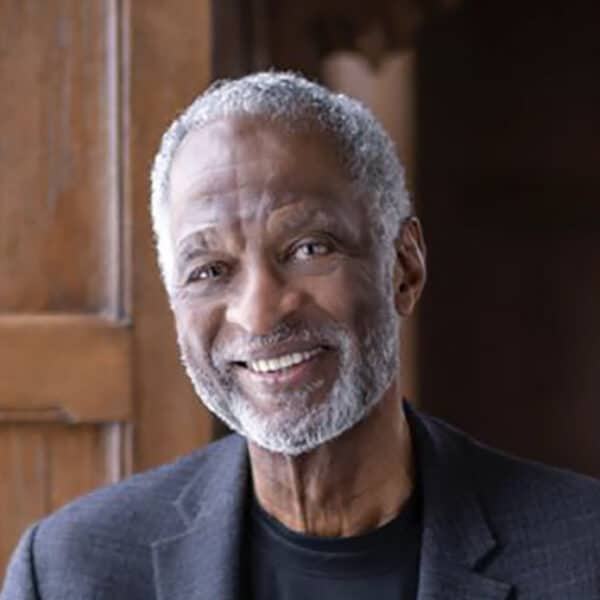
Fuller admits the rift started when he became upset by comments made by McGee and the late founder of the Milwaukee Courier, Dr. Jerrel W. Jones.
Jones and McGee put comments in the newspaper that stated due to the conditions in Black America, no Black person should be held responsible for crimes.
“I didn’t believe that,” Fuller said. “I felt like what I feel like today — that we do have to be held responsible for our actions.
“But we ultimately worked that out. (McGee) is somebody who I really respected. I think he did a lot for this city. In my opinion, he could have done even more if he decided to approach it in a different way, but Mike is Mike. He decided to approach things in the way he decided to approach them. Essentially what I mean by that, if you look at the library up on Center Street, it was built because of Mike when he was the alderman. Mike really had the ability to cut deals and negotiate the politics. He could have been even more effective as an alderman, if he decided he wanted to do that. But he decided he was going to put a bag over his head instead. That’s just the way Mike was.”
McGee was famously prone to the public stunt if it meant bringing attention to the plight of his constituents. In one of those instances, he wore a brown paper bag over his head for the official 1988 Milwaukee Common Council photo.
In another case, he burned tires on Interstate 43 to bring attention to freeways polluting Black neighborhoods. But Fuller said there was no changing McGee and the wider public would only focus on the stunts not the work he was getting done.
“When he talked about burning tires on the freeway for example, people went crazy,” Fuller said. “The one thing they wouldn’t look at is what about the basketball league he started? What about all the stuff Mike was doing? So even though he would say things that some people would consider to be outrageous, it was his way of trying to get something done. But people would tend to look at things like that, but not look at the actual impact that he was having on a part of the community that a lot of people didn’t even care about.”
Fuller wouldn’t have taken the same approach.
“When you try to do something that helps our community, there’s different pathways that you can choose,” he said. “And depending on the pathway you choose, it’s gonna determine who is going to listen, who is going to follow you. It’s going to determine what you can actually get done.”
McGee also knew that he and Fuller were different types of people.
Fuller said, “One night we were driving and Mike said, ‘You know I shouldn’t be meeting with a nigga like you.’”
The men had disagreements on what’s best for the Black community, plus Fuller believes McGee might have resented his college degrees as he was a doctoral student at Marquette at the time.
“But you know, we were able to work closely together to try to get something done,” Fuller said.
The men’s advocacy in part helped lead to some change after Milwaukee police brutally beat Lacy and the 22-year-old died in the back of police van after being arrested for a rape he did not commit.
“Ernie Lacy was murdered by the Milwaukee Police Department,” Fuller said, adding that many tried to split up him and McGee.
“We had an agreement that we weren’t gonna let people separate us,” Fuller said. “If somebody said something about Mike, I was gonna tell Mike, if somebody said something about me, he was gonna tell me. And so we talked every single day.”
In 1983, the Ernest Lacy Law passed the Wisconsin State Legislature, making it illegal for authorities to fail to render aid. Police were convicted of failing to render aid to Lacy and Lacy’s family ultimately won a $600,000 settlement in court.
After receiving more acclaim and recognition from Lacy's death and subsequent criminal hearings, McGee sailed to an electoral victory for a Common Council seat and served two terms while leaving a lasting legacy.
Fuller, for one, said he doesn’t believe in legacy, but reminisced about his dear friend anyway.
“I don’t believe in legacy,” Fuller said. “You do what you can do when you can do it. You do the best you can to try and help our community and how people speak about that.
“I love Mike McGee. I think he cared deeply about the poorest Black people in our community, the people with the least amount of power. Put aside the controversy and look at certain results, just the concrete things that Mike did that make life better for people who had nothing. He is a person who made a major contribution to try and make a difference for people who had no power. He didn’t sit on the sidelines. You can argue about tactics but I prefer to go to why he was doing what he was doing. He didn’t just run his mouth, whether you like the actions or not, he acted as opposed to just talking. He was not afraid.
“I hesitate to say there will never be another. Will there ever be another Wilt Chamberlain? Well, what is (Victor Wembanyama)?”
Related stories:
- As he faces terminal cancer, Mike McGee Sr. reflects this Juneteenth on his lifetime of fighting for Black Milwaukee
- For every Mike McGee Sr, there is a Marvin Pratt
- ‘We Need to Tell Our Own Story': A Conversation on Juneteenth, Journalism, and the Importance of the Black Press
- Mike McGee Sr.: Milwaukee has more Black leaders than ever. So where’s the change?
Drake Bentley can be reached at drake.bentley@civicmedia.us.
Drake Bentley is the general assignment reporter for the Milwaukee Courier, covering politics, sports and the community. He is an award-winning investigative journalist who has worked for the Milwaukee Journal Sentinel, Wisconsin State Journal, Newsweek, Heavy and The Sporting News. He is a northside Milwaukee native, former political staffer and graduate of the University of Wisconsin-Whitewater and the University of Nebraska.

