

“Move It or Lose It”: USDA Threatens Workers and the Rural Communities They Serve

Sep 25, 2026, 1:00 PM CT
Share


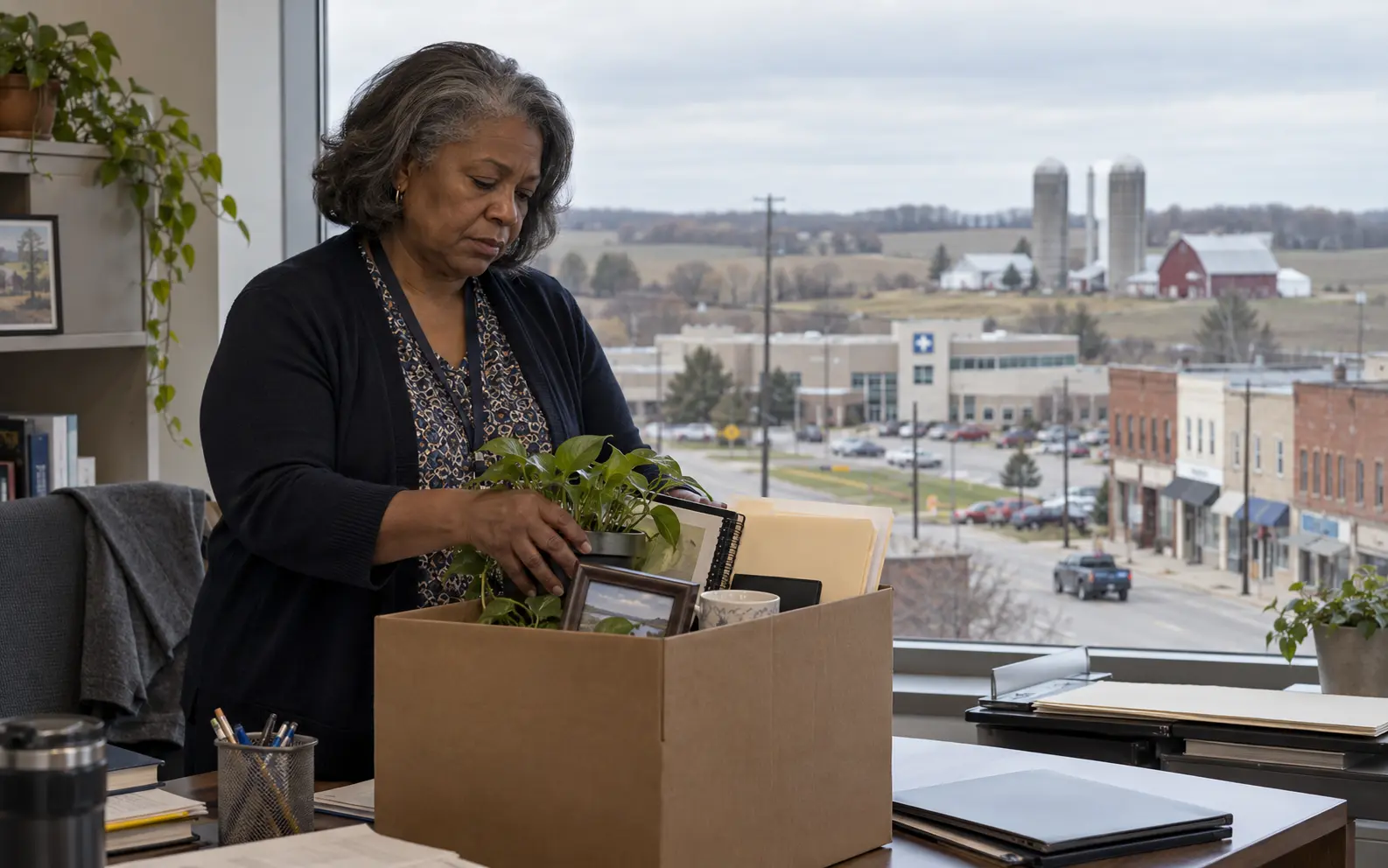
As a former federal employee, I regularly chat with friends about the topsy-turvy nature of the Trump Administration and the rapid changes occurring with federal workers. However, I wasn’t prepared for one of my friends to call and tell me that she received notice that she would be unemployed if she didn’t agree to move to Dallas next month. Chearice Vaughn has spent thirty years at the U.S. Department of Agriculture helping rural America get the financing it needs to grow. Now she must choose between two things she never expected to weigh against each other: her career and her home.
Vaughn, a financial and business loan specialist with USDA's Rural Development mission area and president of AFSCME Local 3870, is one of fifty-three employees who recently received relocation notices to move from D.C. to Dallas. If she refuses, she loses her job. If she accepts, she leaves behind the Washington, D.C. community where she has built her life.
Her situation is not unique. It is the new reality for thousands of federal workers caught up in one of the most sweeping restructurings in USDA history.
The USDA plans to move more than half of its 4,600 Washington-area employees to regional offices as part of a broader reorganization that it says will better tailor its services to farmers and ranchers. Rural Development is among the hardest hit. According to a letter from Senate Democrats, sixty percent of positions at that agency will be relocated to St. Louis or Dallas. Selected positions in the Rural Utilities Service and the Rural Business-Cooperative Service are being moved to a new hub in Dallas-Fort Worth, with deadlines falling in September and October 2026. Field staff in state and local Rural Development offices are not required to move.
USDA leadership, including Deputy Secretary Stephen Vaden, argues that the move will streamline loan and grant processing, cut Washington bureaucracy, and put operations closer to the rural regions they serve.
Vaughn and many of her colleagues see it differently. "Relocating us hundreds of miles away doesn't make the work better," Vaughn said in an interview with Government Executive Magazine. In her view, the move brings added moving costs, resignations, and lost expertise, and she calls it the opposite of good government.
Federal workers have seen this before. During the first Trump administration, USDA permanently relocated hundreds of positions from Washington to Kansas City, resulting in significant staff attrition. Research offices lost large shares of their experienced staff, and it took years to rebuild.
Union surveys and internal memos suggest history could repeat itself, with as many as two-thirds of affected Rural Development workers expecting to resign or be pushed out rather than uproot their lives. Many are mid- or late-career employees with spouses, children in school, aging parents, and mortgages. For a thirty-year employee like Vaughn, the choice is especially stark: move across the country near the end of a long career or walk away from it.
As president of AFSCME Local 3870, Chearice is sounding the alarm about something bigger than her own job. The employees being relocated are the people who process, underwrite, and manage the loans and grants that keep rural economies running. When they leave, their decades of knowledge leave with them.
Wisconsin shows what is at stake. According to USDA's own figures released in April 2026, in the last year, USDA Rural Development made $330 million in investments in rural communities across Wisconsin. That included $105 million through the Community Facilities program for St. Croix Regional Medical Center to build a replacement critical access hospital in St. Croix Falls. In Westby, the state's only cottage cheese manufacturer, a farmer-owned cooperative, is expanding and modernizing through a nearly $15.5 million Business and Industry guaranteed loan, a project that will support 150 jobs. In fiscal year 2025, Rural Development invested more than $73 million to help rural businesses and cooperatives in Wisconsin.
The year before brought similar support. In October 2024, USDA announced it was investing nearly $93 million through the Rural Energy for America and Powering Affordable Clean Energy programs in Wisconsin, and in December 2024 it announced over $32 million to strengthen rural infrastructure and create construction jobs in the state.
Many of these programs, including business and cooperative loans and rural electric and energy financing, run through the very Rural Business-Cooperative Service and Rural Utilities Service offices now being relocated. If experienced staff walk out the door, rural hospitals, dairy cooperatives, utilities, and small businesses could face longer waits and fewer people who understand how to get complex deals done.
Unions are fighting back. Several federal employee unions filed a lawsuit in early July seeking to block the restructuring, arguing that mass resignations would prevent the USDA from fulfilling its mission. A newer suit, backed by AFGE, AFSCME, the National Federation of Federal Employees, and the National Treasury Employees Union, alleges that USDA knew forced relocation would drive out its experienced people and never once studied what losing that expertise would do to the department's ability to meet its statutory obligations. Critics call the plan a "reduction in force in disguise."
Lawmakers have also weighed in. Senator Amy Klobuchar, the top Democrat on the Senate Agriculture Committee, and 19 other senators sent a letter to Deputy Secretary Stephen Vaden on July 27 expressing concern about the reorganization's impact on the Rural Development agency.
USDA disputes the predictions of a mass exodus. In an Aug. 28 court filing, an acting USDA official stated that 64% of the 725 employees told to relocate so far had accepted their reassignments.
For Chearice Vaughn, the numbers are personal. After thirty years of helping rural communities build hospitals, expand businesses, and keep the lights on, she is being asked to prove her commitment by abandoning her home. She is speaking out not only for herself, but for the colleagues facing the same impossible choice, and for the rural families who depend on their expertise, whether they know it or not.

Dr. LaKeshia Nicole Myers is an accomplished education leader, public servant, and advocate for educational excellence with more than 17 years of experience across K–12, higher education, and public policy. A former member of the Wisconsin State Assembly (2019–2024), she championed education initiatives while serving on key legislative committees and previously worked in federal policy with the U.S. House of Representatives. Dr. Myers currently serves as an Adjunct Professor of History at Lakeland University and Managing Partner of EduStar Consulting, bringing deep expertise in instructional leadership, special education, and equity-focused educational reform.

