

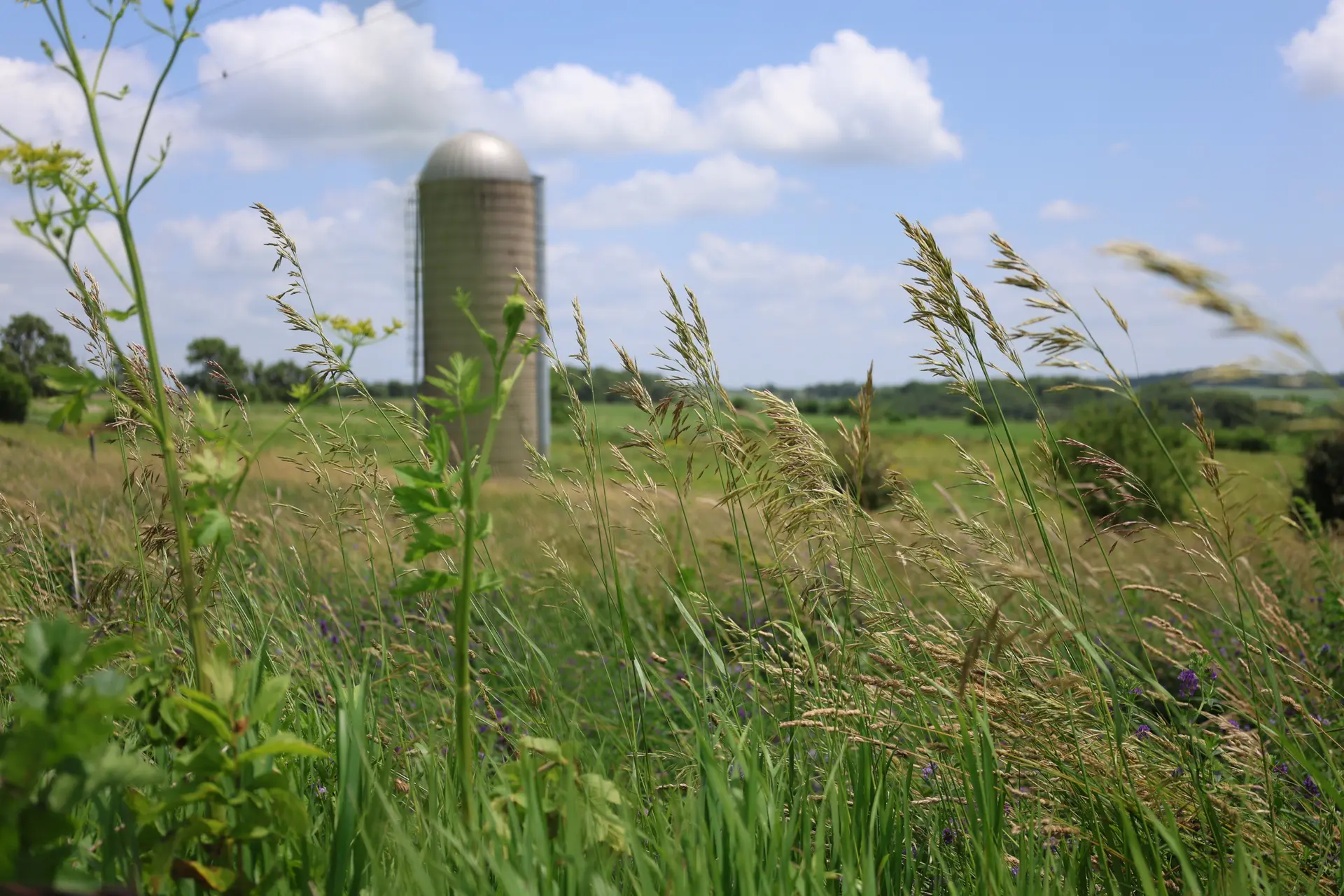
Source: Jennie Brand, Civic Media.
Commentary: Data Centers Aren’t the Only Threat to Farmland
Tech and finance firms are cashing in on rural America at an alarming pace.
Sep 28, 2026, 10:05 AM CT
Share


Protests against data centers have exploded across the US, with communities revolting against a multitude of proven damaging effects on energy prices, clean air and water – and the devastation of tens of thousands of acres of agricultural land. Recent headlines in national publications report that farmers and rural communities are rejecting multimillion-dollar bids from institutional investors and tech companies to buy their farmland to build data centers. A farmer in Kentucky rejected $33 million for her farmland; another in Pennsylvania turned down a $15 million offer; and one farmer in Wisconsin even reportedly refused a whopping $70+ million bid.
Land has become the next big asset class for investors, especially billionaires and private equity firms, to hide and protect their wealth. It is seen as a safe, low-risk way to park money to hedge against inflation – at the expense of farmers and local communities alike.
These investors aren’t just seeking out farmland to build data centers. Just like they’re targeting housing, investment firms are buying up land and renting it back to farmers for a hefty profit.
The 2024 Tenure, Ownership, and Transition of Agricultural Land (TOTAL) Survey, released this March, shows that 87% of the more than 2 million landowners renting out farmland are non-operators – that is, they are not actively farming, and the majority of these landowners never have. While these landlords raked in more than $34 billion in rent combined, the total value of farmland held for rent is $1.7 trillion – up 47% since 2014. We are watching in real time the emergence of a long-term, non-farming rural landlord class.
While the TOTAL survey provides a useful indicator of farmland ownership trends, it doesn’t give us the full picture. Farmland ownership has never been effectively tracked in the US with regularity, and what limited data exists is difficult to find. The data we do have shows that investment in farmland has risen dramatically over the past two decades. Companies like AcreTrader, Farmland Partners, and others that allow individuals to invest in farmland have become increasingly popular. The most alarming growth has come from institutional investors, like pension funds, private equity firms, and wealth management groups. The value of farmland held by institutional investors has more than doubled over the past three years up to $16.6 billion dollars by 2024, an eightfold rise since 2008. Based on publicly available data alone, the largest corporate owners of US farmland control more than 2 million acres.
But why are farmers selling their land in the first place? The hard truth is that farming just isn’t working as a viable livelihood anymore, and hasn’t for years. In just five years from 2017-2022, we lost 159,000 US family farms. The Farm Crisis didn’t go away in the 1980s – it’s just become quieter and less visible to most. Chronic low and volatile prices across sectors, coupled with a handful of multinational corporations tightening their iron grip over global agriculture, have pushed farmers to the brink of existence. With farm debt at an all-time high, selling the farm for the best offer possible is often the only feasible way to escape dire financial straits. And when the farm is for sale, companies with billions in assets are primed to outbid new and beginning farmers seeking land to start their own businesses.
The best opportunity we have to protect farmland comes from strong federal policies that safeguard land for multiple generations of working farms and ensure farmers make a living wage. Right now, the Farmland for Farmers Act is one of the boldest pieces of federal legislation to combat this worrying trend. Modeled after anti-corporate farming laws in Midwestern states, the bill would stop large corporate entities from being able to purchase farmland only to let it lie fallow in the hopes that its value will skyrocket over time, or to rent it back to farmers at a premium price. With policies like it, coupled with a Farm Bill that allows farmers to pay their bills and sustainably grow their businesses, farmers might stand a chance.
It’s long overdue for policy solutions championed by federal representatives not afraid to stand up against deep pocketed special interests. We need Congress to enact policies like the Farmland for Farmers Act that fight back against the profiteering on the backs of farmers, communities, and our natural resources. The first step in protecting farmland means supporting the next generation of farmers to enter the business with confidence and without having to compete with billionaires. We need to ensure that farmers now and in the future actually have the land they need to feed us all.
Tim Gibbons is the Executive Director of the National Family Farm Coalition, a national coalition representing 30 grassroots farm, ranch, and fishing organizations in Washington, DC. A life-long Missourian, Tim has spent decades organizing family farmers, ranchers, and rural residents in support of fair, healthy and thriving rural economies, fair markets, and clean water and air.
Dena Hoff represents the Northern Plains Resource Council on the NFFC Board. Since 1979, she’s raised sheep, cattle, alfalfa, corn, and edible dry beans, among other crops, on her farm in Glendive, Montana. She is an active member of and advocate for her rural community.

This story was originally published in the Daily Yonder. For more rural reporting and small-town stories visit dailyyonder.com.


