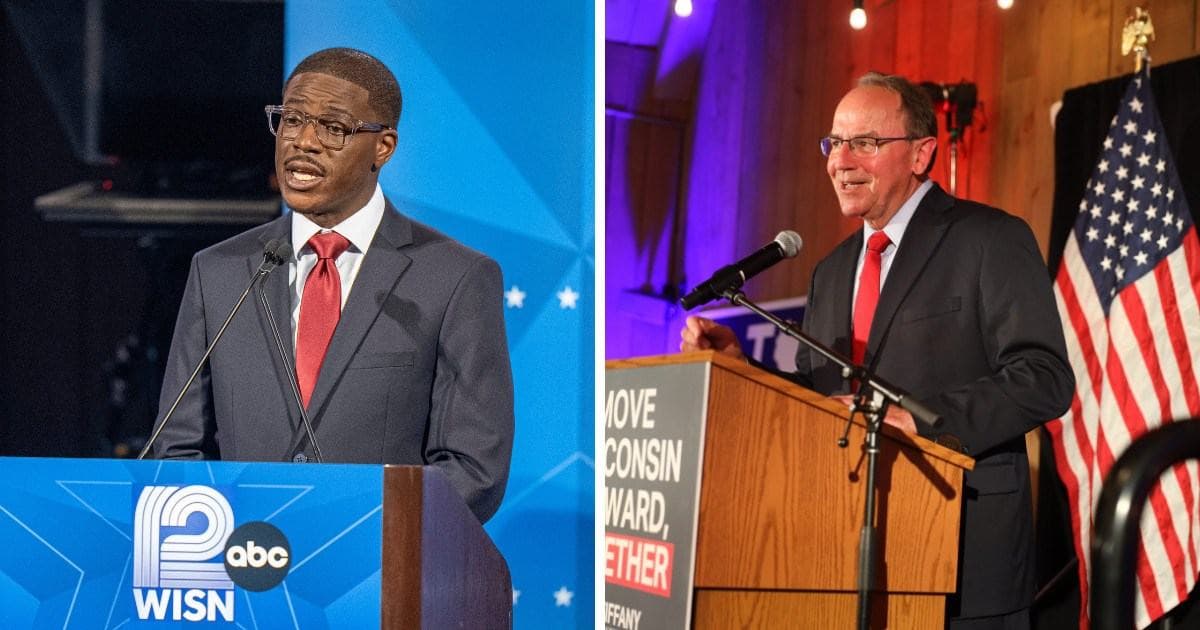
Milwaukee County Executive David Crowley, left, and U.S. Rep. Tom Tiffany. The Wisconsin gubernatorial candidates have opposing plans for tackling rising health care costs. (Andy Manis for Wisconsin Watch and Zoey Elwood / Wisconsin Watch)
You asked. We got answers. Wisconsin governor candidates respond to reader questions.
Wisconsin Watch asked the public to submit questions for David Crowley and Tom Tiffany. Here’s what the candidates said about firefighters, bike paths, transgender rights and other topics.
Oct 12, 2026, 8:37 PM CT
Share


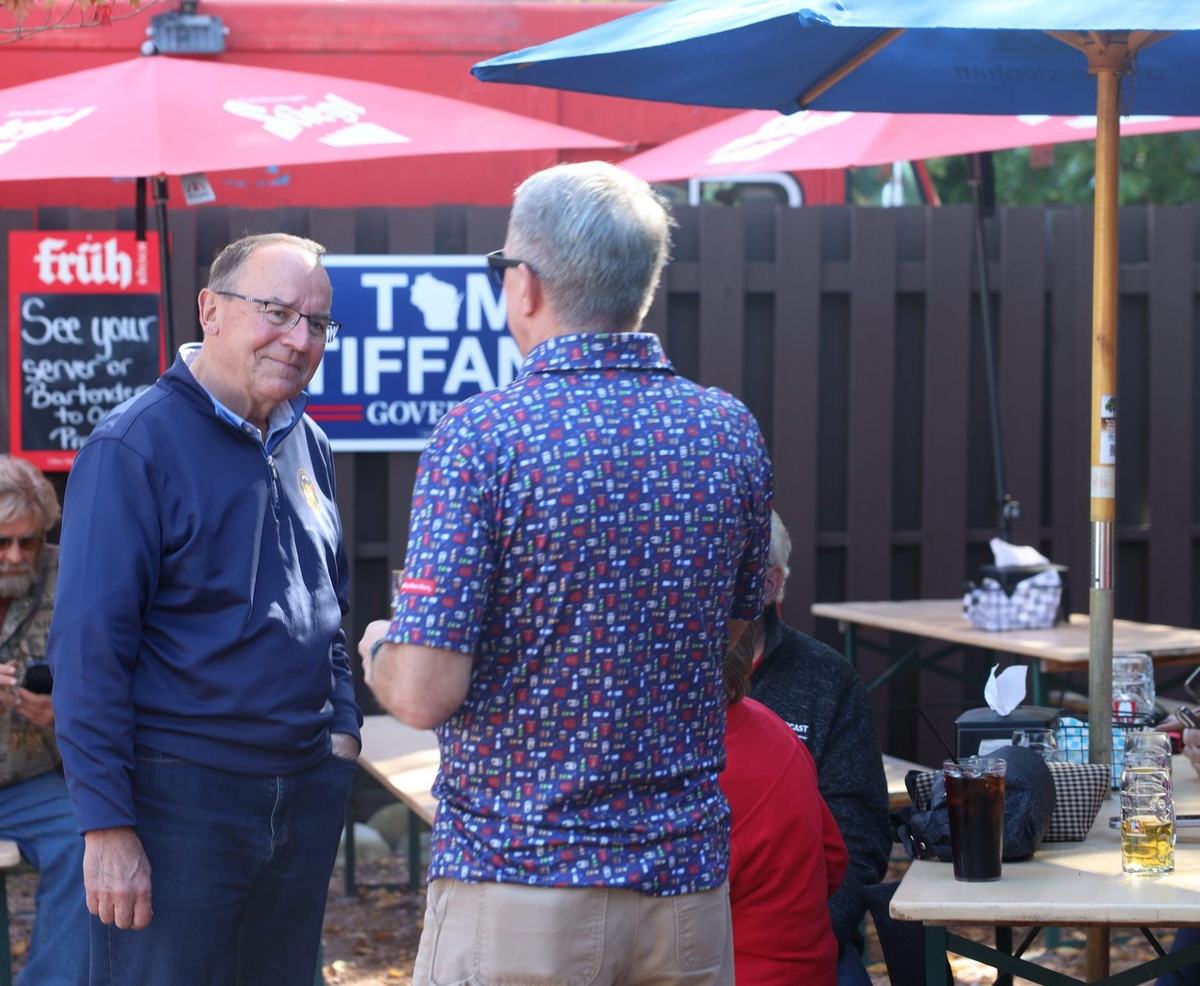
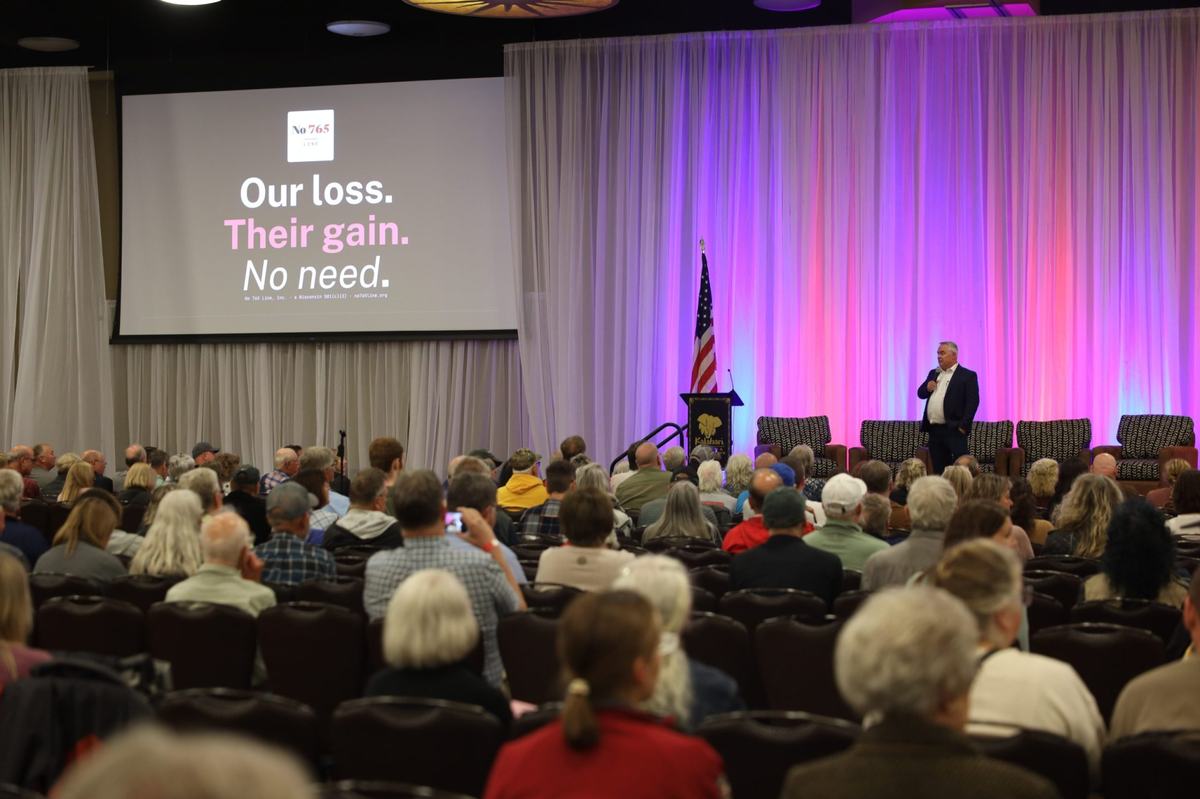
At a brewery in Mauston, Milwaukee County Executive David Crowley took a question from rural Democrats about what led to his exit and reentry in the chaotic Democratic gubernatorial primary this summer. At a biergarten in Germantown, U.S. Rep. Tom Tiffany answered a guest at a picnic table who asked how his property tax plan might help young people purchase a home.
As Crowley and Tiffany sprint toward Election Day on Nov. 3, they are crisscrossing the state to get in front of potential voters and make their case to be the state’s next governor in a high-stakes election that could determine future political control of the Capitol in Madison. The latest polling from the Marquette University Law School indicates it’s shaping up to be another close gubernatorial contest in Wisconsin.

Voters are already casting their absentee ballots, and early in-person voting begins Oct. 20. Wisconsinites can watch the candidates participate in the race’s lone televised debate on Oct. 21, but few voters across the state may get the chance to ask Crowley and Tiffany questions about issues that matter in their communities.
In August, Wisconsin Watch asked readers to send us their questions for candidates running for office in 2026. We caught up with Crowley and Tiffany at their campaign events to pose several of those questions.
Their answers show two very different approaches, with occasional overlap, to issues they may face if they are elected governor in November. We also provided additional context when appropriate. After reading this, find out more about the candidates in our voter guide.
Reader question: What would your administration do to help fund volunteer fire departments?
David Crowley: “I think that’s a very good question. It’s also one of the reasons why I worked to get Act 12 passed and across the finish line because we know how important this type of funding is for communities all across the state, and so we need to step up. We need the state to step up as it relates to shared revenue to make sure that EMS, our firefighters, are getting the support that they need. And I want to continue that work that we started with Act 12 when I become governor.”
Tom Tiffany: “We’re going to review the volunteer fire department programs that are out there because what I’ve heard from local officials is that they’ve made the requirements so onerous now they’re keeping young people from going through the process to get certified. So, like the training hours have basically doubled, and so we’re going to review that because what it’s doing is it’s reducing the number of people that want to go through the process to become a volunteer fireman. And so I always put it this way that the perfect is becoming the enemy of the good. And I understand they want to set really high standards, but let’s make sure we have good standards but we’re not, they should not be excessive.”
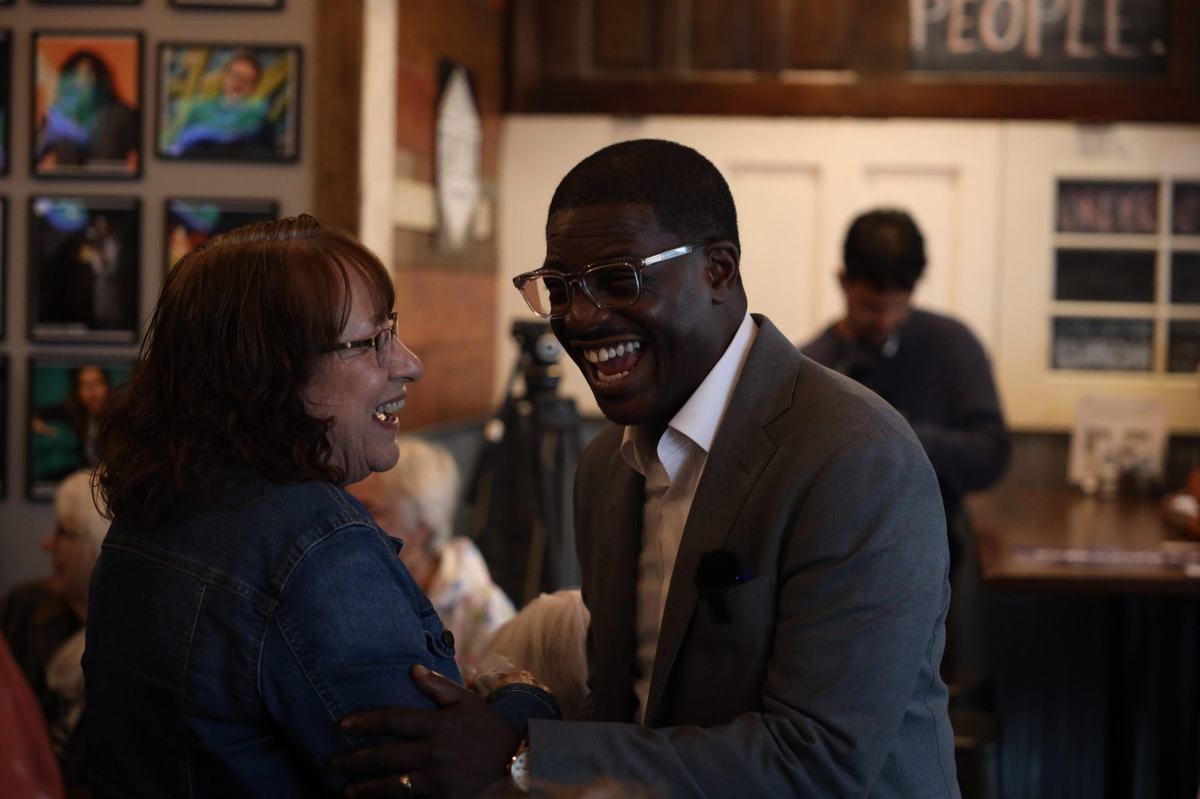
Reader question: How will you bring native nations to the table in your administration? Have you met with any of the native nations as you’ve been campaigning?
Crowley: “I know that our state has a long history and a long relationship with our native nations and our tribes all across Wisconsin, and as governor, I want to continue to build that relationship and continue that track record. I think it’s extremely important that you know both our governments sit down to actually figure out how we can help one another moving forward. You know, we just have a duty to do that because these are the lands that they lived in way before our government was actually here, and so I want to make sure that we are committed to building that future together.
I’ve met with a few of the different nations, and actually between now and Election Day, I know that we’re going to be heading up north to visit some of their land as well.”
Tiffany: “I would work with the tribes. I mean, the governor has a responsibility to do that, and I’ll sit down with the tribes both collectively and individually if they choose to, and hear what their concerns are. I’ll share what my concerns are, and we’ll just have good dialogue.
I’ve talked to some of tribal leadership here and there. I’ve had some discussions with them. I would say that I will definitely be sitting down with the Lac du Flambeau in regards to their road closures, because having dealt with that issue federally, and the judges ruled that that’s illegal to do that, I’m hoping we can come to a resolution where we don’t have this disagreement that’s going on, where they’re closing roads illegally.”
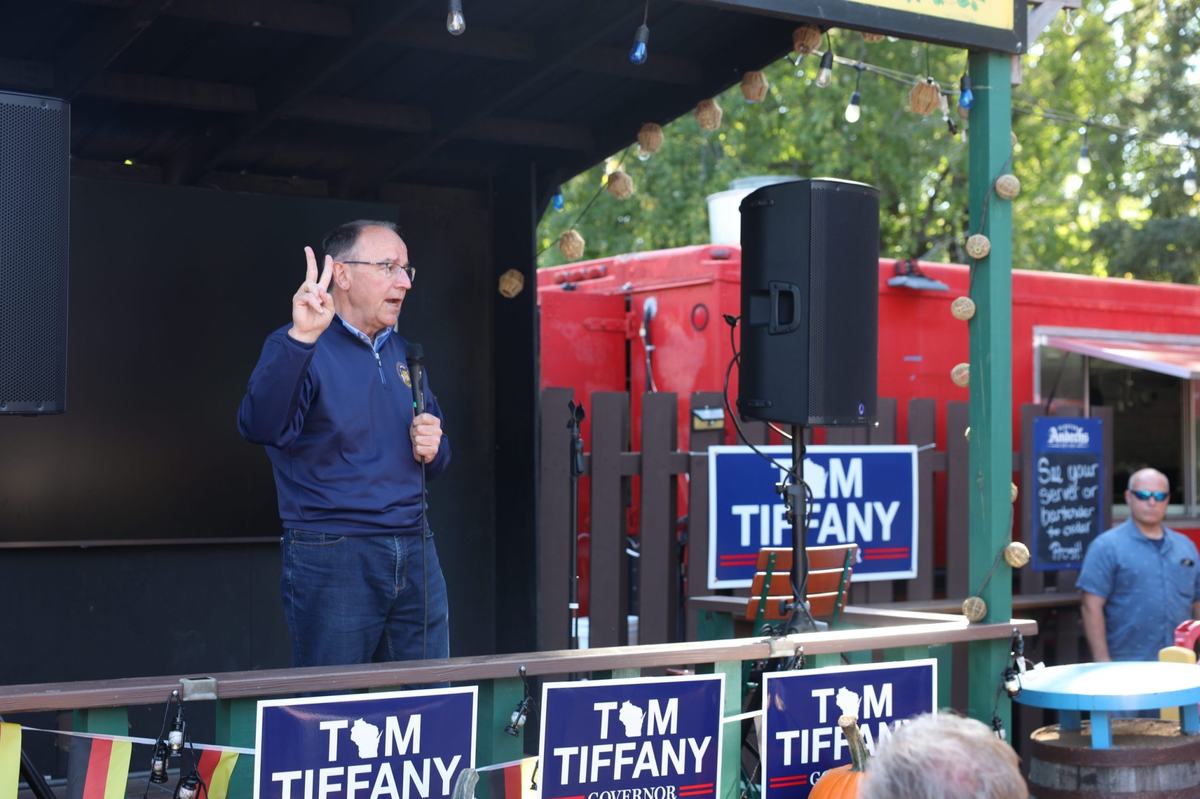
Reader question: What policies would you enact to protect Wisconsin from droughts, severe thunderstorms and tornadoes?
Crowley: “The changing of climate is real and you have to follow the science and the data to make sure that we are pivoting the way that we need to to make sure that we’re protecting our land, protecting our water, protecting our air. But I also know that the state of Wisconsin has a 2050 climate action plan as well, but it doesn’t have any teeth or levels of accountability to it. I want to make sure that it’s a plan that we can actually implement and where the community can actually hold us accountable in making sure that we’re addressing climate change in Wisconsin.
The other things that we can do is as we look to the future, how do you build for more resilience, right? How do you build thinking about things, for example, the flooding, right? We’ve seen that here within Milwaukee County within the past couple of years, but it doesn’t just affect urban areas. It also affects farmers, affects our rural communities and affects their crops. So it’s about making sure that we’re building with more resilience because we see more extreme weather patterns.”
Tiffany: “The important thing that needs to be done is, I mean, we’ll make sure that our disaster aid program is fully prepared. I mean, I’ll make sure … that they’re fully prepared for any disasters that may happen in Wisconsin. I think that’s the most important thing that we can do is simply be prepared when they do happen, whether it’s flooding or whatever.
The other thing is that I’m going to make sure that I have a good line of communication with the White House in regards to this. In case you have a situation like in New London this year, where they had the flooding, and we sent letters to the administration asking them to designate it a federal disaster area, and the administration said yes, we’re going to do that. I think it’s important to have good communication there. And this is one place where I think David Crowley is really making a mistake when he says, almost every time he does an interview, and he’s speaking about me, he says ‘Donald Trump, MAGA, all the rest,’ and he’s basically just saying ‘I’m against everything that Donald Trump stands for.’ Well, you’ve got to work with the White House occasionally when you’re the governor.”
Reader question: Are there any rights that transgender children and adults have currently that you would seek to limit, such as access to gender-affirming care?
Crowley: “No, I am not going to limit our LGBTQ community from what they currently have. We have a job in making sure that we protect our LGBTQ community, that we protect all children in this state, to where they can live and be their healthy selves, no matter where they are. And so, you know, I’m always going to be an accomplice when it comes down to the LGBTQ community and making sure that we’re protecting their rights and their ability to live healthy lives in Wisconsin.”
Tiffany: “I would say two things in regards to that. So first of all, public money should not be used for that, including for adults, and it should not happen to minors. I mean, puberty is a very delicate time of life. It’s a time of confusion for young people, and to say to them, to say that we’re going to allow these sexual, what I call, mutilations, to happen, I think is just wrong when they’re minors, and just because it’s a time of great uncertainty, we should let them work their way through it. And then, as adults, if they choose a different path, then you know that’s up to them as adults. But we should not be doing that as minors. And I would restrict that funding for medical facilities that are offering those surgeries to minors, we would restrict those dollars from going to them.”
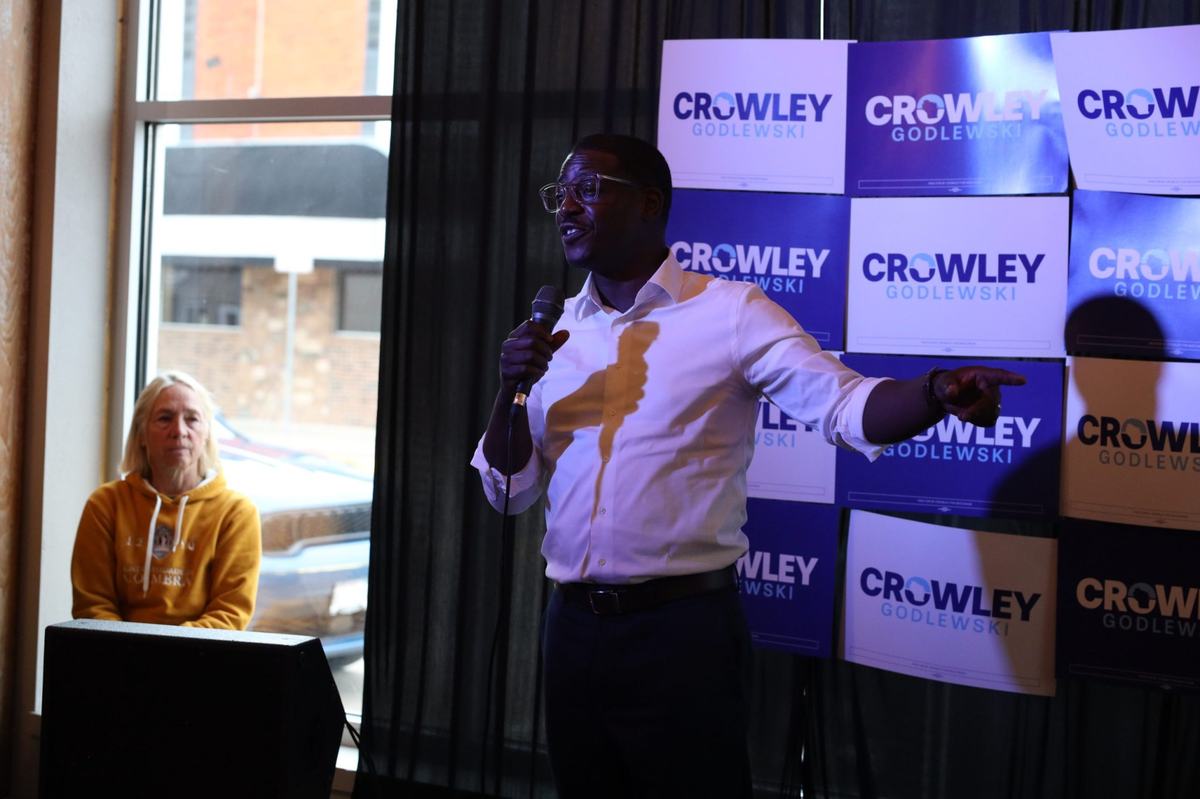
Reader question: Do you envision any reforms to the current campaign finance system that gives political parties the ability to raise unlimited funding for candidates?
Crowley: “What I’ve realized running for governor is that you spend a lot of time fundraising. Unfortunately, Tom Tiffany has not because he has three billionaire backers, and it takes us away from actually talking to as many voters as possible. And when you think about how much money that we see going into supporting candidates all across this country, when you think about the $24 million that is backing Congressman Tom Tiffany from three billionaire donors, imagine how much more we could afford child care, how much we can help health care stretch across this state, how we can start fully funding our public schools. So yes, we absolutely need campaign finance reform in the state of Wisconsin.
I want to make sure that no one can buy this election. The fact that any political party can receive unlimited amounts of funds and donate that to one particular candidate, that’s insane to me. And so we need to make sure that government continues to stay in the hands of the people, and not in the hands of the ultra wealthy.”
Tiffany: “I would work with the Legislature in regards to that and see if they want to make some changes. I think it’s going to take a bipartisan effort in order to be able to do that, and so I would just work with the Legislature to see if they want to change that.
“I do find it ironic that the Democrat Party is making a big deal out of this when they raised $50 million for the 2023 Supreme Court race, $48 million in the 2025 race, almost all of it out of state, including the governor of Illinois, and now they’re whining about it. I mean, to me, it’s really clear what’s going on. David Crowley is not exciting their base, and they’re having a hard time fundraising because what he’s proposing and just the basement campaign that he’s running, primarily between Milwaukee and Madison, is just not exciting voters around Wisconsin. So he’s having real difficulty being able to raise money.”
Reader question: Do you support restoring local eminent domain for bike and pedestrian purposes?
Crowley: “I believe in local control and I think that this is basically what it goes down to. I think that local communities should be able to have a say-so on what they want to be able to do, you know, with the properties that are within their communities. And so, to say whether or not I support it for a particular project, I support anything that gives local municipalities a greater say-so at the table, at the decision-making table.”
Tiffany: “I think eminent domain should very rarely be used, and if it’s oftentimes that would be going over. I remember the example when I was in the Legislature. It was in St. Croix County, and they wanted to do it over farmland. I am very opposed, whether it’s bike trails or wind and solar, I am very opposed to converting our farmland. It is one of the cornerstones of our economy, and we have got to stop destroying our farmland. So I think eminent domain should be used very, very rarely, just very rarely.”
Reader question: What’s your position on marijuana legalization and why? What are your concerns if you do not support recreational legalization?
Crowley: “I believe it should be legalized, and I think that it needs to be legalized. One, you know, we don’t have the same opportunities as folks in Minnesota and in Michigan and in Illinois. I believe that we should support it, one, because this is a personal health position for those who want to utilize it as an alternative to a prescription drug I think is extremely important. But I also look at it as an opportunity, right? Being able to grow our economy here locally, but also finding a new revenue stream to invest in things like public safety, public education and child care.”
Tiffany: “I think you take a go-slow approach because we’ve seen some states that went straight to it, like I think about Colorado, and they had some real problems as a result of that. Think about Oregon, where they adopted full legalization, but then they also legalized other hard drugs. They had to pull back, and so I think those are a lesson to other states that we should take this go-slow approach. Also, I’ve voted federally for more money to go into research, and I think that research can inform states about what’s the best approach to take in regards to legalization.”
Reader question: Do you support the BECI and MariBell electric transmission line projects? Will you intervene if they decide to skip public utility corridors and route them through private land?
Crowley: “No, I do not support them in its current form, and that’s because it is literally going through many different private properties and agricultural land that could be utilized, and it’s unfortunate. What’s really unfortunate is that they did not pass. ROFR would have utilized existing right of ways instead of creating new pathways, you know, for these lines that’s going to basically power these data centers. And so I want people to recognize and know that this shouldn’t be happening and the only reason why it’s happening is because the Republican-controlled Senate, particularly, didn’t pass the law to utilize the existing right of ways. We want, I want to preserve our beautiful areas. When I think about the Driftless region, I want to make sure that people can continue to have the types of views and in the agricultural lands that they need to produce the products that they harvest. And so, in its current form, I absolutely oppose this line.”
“I’m not sure of everything related to what the governor’s power is related to this. But as you can imagine, it all depends on when this gets approved, right? Because if it gets approved before you know anybody is sworn in, you know that that pretty much handcuffs anybody’s ability to do anything moving forward. But I want your readers to know that you know they have a friend in me. They can call me their Randy Newman, in a sense, because I’m going to make sure that we’re fighting on their behalf as it relates to these power lines.”
Tiffany: “I oppose this because we’ve been seeing this across the state of Wisconsin. So first of all, just having a farm background has really given me a sense of what is happening because if we destroy our farmland, one of the most important things we do is grow food, and we’re going to, as we convert this farmland, thousands of acres of it, we’re going to drive food prices up eventually as a result of that. But there’s also the increase in energy prices. The last eight years, over $2 billion worth of rate increases here in Wisconsin, and I think one of the utilities just asked for another 14% increase, so it’s clear they’re going to continue to skyrocket our utility rates here if we continue this conversion, but to bring in something like this line, which is unique to Wisconsin, that we’re not very familiar with. I think there needs to be a timeout here and reassess where we’re going as a state.”
“I think the key thing is to be able to get PSC members that are going to respect private property. They’re going to make sure that we’re not using eminent domain, and that we’re seeking low-cost, affordable, reliable energy sources rather than the high-cost sources of energy.”
Reader question: Do you support the Knowles-Nelson Stewardship Program? What changes would you want to see to the program?
Crowley: “The Knowles Nelson Fund, we’ve never seen this become a political issue until, you know, within the past year and a half, two years. This has always been a bipartisan issue, and I want to make sure that we’re fully funding the entire program, especially when you see Donald Trump and Tom Tiffany stripping safeguards at the federal level that keeps our water and air clean.”
Tiffany: “I support renewal of the stewardship program, and the primary change that I want to make is to make sure that we’re maintaining existing state properties appropriately. I always use the example of someone who has a home, they got a hole in their roof, and their neighbor’s house comes for sale. Do you buy that house or do you fix your roof? And I see that happening with some of our state properties where they’re in disrepair. We need to make sure the roads and the buildings, the outhouses and all the rest. We’ve got to make sure that parking lots, we got to make sure that stuff is all in good repair, so people can enjoy their experience at the existing state properties. So let’s make sure we maintain what we have first before we buy anything else.”
Reader question: How will you protect and ensure the quality of Medicaid-funded home- and community-based services (like Family Care and IRIS programs) for older adults and people with disabilities?
Crowley: “That’s extremely important to me. You know, when I think about our seniors, people with disabilities, we’re talking about the most vulnerable populations, like here within the state of Wisconsin, and we’re going to make sure that they continue to get the direct services that they need. And when we talk about expanding BadgerCare, I mean, this is about actually allowing people to pay into a system to make sure we can keep it sustainable moving forward, and so I’m excited about the opportunities. But we know that we have a long road to go. My job is to focus on how we win in November to make sure that we can provide that relief, those health care services that so many families rely on each and every single day.”
Tiffany: “Part of it’s going to be the audit that I talked about. Part of it’s going to be the auditing. So the auditing, we’re seeking to first of all eliminate the waste, fraud and abuse, but just as importantly, we want to make sure that people get quality care. We’re generous here in Wisconsin in helping people who are in need, and we should make sure they’re getting the best care possible. I would add, just generally in regards to health care, we’re going to have a transparency part to our budget that health care costs have to be fully transparent. Our health care providers have to do that. We’ve seen with the study out of UW-Madison that our health care expenses are 26% higher than Illinois. We should not be worse than Illinois in anything, and so it’s certainly something that needs to be dealt with.”

Originally published by Wisconsin Watch.