



Milwaukee Neighborhood News Service invites community members to submit opinion pieces of 500-800 words on topics of interest to central city Milwaukee. To send a submission for consideration, please email info@milwaukeenns.org. The views expressed are solely those of the authors.
Wisconsin will have a new governor next year. A fair amount of election primary discussion revolved around “defunding the police.” Every candidate, regardless of social media posts, vowed not to defund the police.

Wisconsin is also one year removed from historic and catastrophic flooding due to climate change that crippled many parts of the state. Our state spends billions every year on an unjust violent carceral state.
Creating a humane future for all of us means not spending resources on death-making entities but instead investing in life-affirming climate resilient infrastructure and resources. Climate catastrophe does not allow us to spend money on both.

Wisconsin, is incredibly systemically racist; Black people and other marginalized people suffer from poorer quality of life. Our state notoriously chooses to incarcerate Black people at one of the highest rates in the country. We do this while knowing that Black, Indigenous, brown and other marginalized communities in Milwaukee and across the state will be disproportionately harmed by climate change.

Abolitionist professor and author Ruth Wilson Gilmore describes the process of organized abandonment as “the intentional disinvestment in communities leading to the gradual disappearance of safe housing, reliable jobs, clean water, healthy food, and a social safety net which, in turn, create opportunities for privatized social services, redevelopment, and increased police presence and criminalization as a way to fill the cracks of a compromised social infrastructure and maintain hegemonic social order.”
This theoretical concept has been the reality of Black Milwaukee and Wisconsin my entire 46 years of life.
The historic August flood
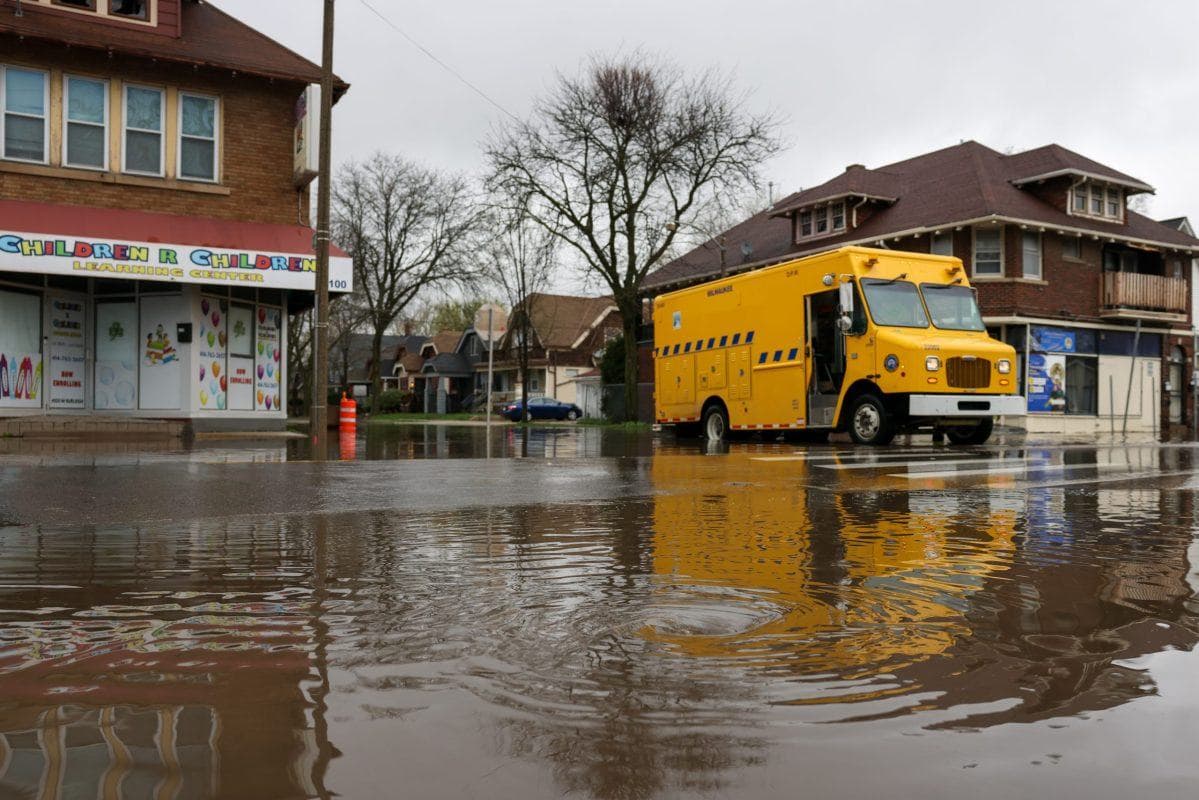
In August 2025, Milwaukee experienced catastrophic flooding that crippled the city and ruined many homes. Millions of dollars’ worth of damage rocked the city, but also Wisconsin, as Gov. Tony Evers called a state of emergency and applied for Federal Emergency Management Agency funds. In April, between Tax Day and Earth Day, we were hit hard again with storms, then power outages due to climate disaster as well as inexplicable infrastructure priorities of our state energy monopoly We Energies.

Climate disaster is only going to intensify in Wisconsin, as the weather extremes will only grow. Tornadoes, rain, flooding, high winds, severe thunderstorms, wildfire smoke/air quality, blizzards, severe cold and heat are some of the phenomena that will continue to endanger communities. Our ability to mitigate harm from climate disaster will need to be a true priority, as the federal government has almost abandoned any serious action to deal with this generational issue.
Much of our media and elected officials equate the phrase of “public safety” with the carceral system. Many notable academics, writers, organizers and victims of violence have strongly argued that instead of investing in a monstrous predatory carceral system, investing in housing, healthcare, education, environmental justice and communities is central to genuine collective safety. Our state, county and municipal budgets are clear indicators that these ideas have not influenced our decision-makers.
Wager against Wisconsin’s future
Every dollar that is spent on the carceral system is a wager against the future of Wisconsinites, particularly Black, brown, Indigenous, immigrant and other marginalized communities. For example, Milwaukee County jailing facilities detainees are 75% Black, though we only make up 25% of the county population. This is because of anti-Black, racist over-policing of Black communities and systemic disinvestment in our communities, which make us fodder for the criminal legal system.
The media narratives around defunding/abolishing the police or prison-industrial complex abolition reduce practical and thoughtful activities to lightning rod social media posts with no room for honest engagement. The reduction of these ideas is a racist dog whistle signaling to mostly white conservative voters that organized violence will exist to control marginalized populations.
It should be obvious that I am not looking to convince Republicans lawmakers or constituents. The idea here is for Democrats not to join Republicans in supporting archaic, anti-Black, racist, misanthropic, carceral pieces of legislation that absolutely hinder any budgetary capacity to deal with climate disaster.
The advocacy for carceral projects as well as the annual budgets for the carceral system leaves us almost zero room for creativity and continues the trend of state violence. The budgets that Democrats control shouldn’t exacerbate harm on marginalized communities. They should prioritize care, support housing, healthcare, food access, education and economic support.
There are many community members, organizations and advocates who have echoed what has been expressed here. Our duty is to fight for what we know we deserve regardless of who is in power and not settle for continued inaction and harm. Our present and future depend on it.

Nate Gilliam is a Milwaukee native, a father of two and a husband. He is the director and co-founder of Milwaukee Freedom Fund and an advisory board member of the University of Wisconsin Population Health Institute.
Jonathan Aguilar is a visual journalist at Milwaukee Neighborhood News Service who is supported through a partnership between CatchLight Local and Report for America.


